Home / Articles
Laser Hair Removal for Sensitive Skin: What You Need to Know
Home / Articles
Laser Hair Removal for Sensitive Skin: What You Need to Know
If you have sensitive skin, you probably know the struggle all too well. A quick shave leaves razor bumps. Waxing sessions end with redness that lingers for days. Even depilatory creams, which promise “gentle” results, sting the moment they touch your skin. Many of our patients at Gumdan Ewha Hospital in Incheon confess that they avoid sleeveless outfits or certain clothing styles simply because the irritation and ingrown hairs are too frustrating.
Then comes the thought: What about laser hair removal?
For some, the idea sounds liberating — smooth skin without the constant battle. But for others, it raises new worries: Will the laser make my skin worse? Will I break out in rashes or get burned?
To be honest, these are valid questions. Sensitive skin reacts differently, and it deserves special care. But here’s the reassuring truth we’ve seen in countless cases: with the right technology, medical expertise, and tailored aftercare, laser hair removal can be safe, gentle, and life-changing even for sensitive skin.
In this article, we’ll guide you through everything you need to know — what makes sensitive skin unique, how modern lasers work, what precautions to take, and why a doctor-led clinic like Gumdan Ewha offers a safer path than at-home or non-medical options.
Sensitive skin isn’t a strict medical diagnosis. Rather, it’s a tendency — skin that overreacts to everyday triggers. Patients with sensitive skin often say things like:
“My face stings when I try new skincare products.”
“Even after waxing, the redness lasts for days.”
“Shaving gives me painful bumps and ingrown hairs.”
What’s happening beneath the surface is usually tied to the skin barrier — the protective layer that locks in moisture and blocks irritants. When this barrier is fragile or easily disrupted, the skin reacts more strongly to friction, heat, or chemicals.
For hair removal, this means:
At its core, laser hair removal is based on a principle called selective photothermolysis. In simple terms: the laser emits a wavelength of light that is absorbed by melanin (the pigment in hair). The light converts to heat, destroying the follicle’s ability to regrow hair — all without damaging the surrounding skin.
But here’s where sensitivity matters: if the laser is too strong, too shallow, or used without proper cooling, the heat can irritate or even burn the skin. This is why device quality and operator expertise are everything.
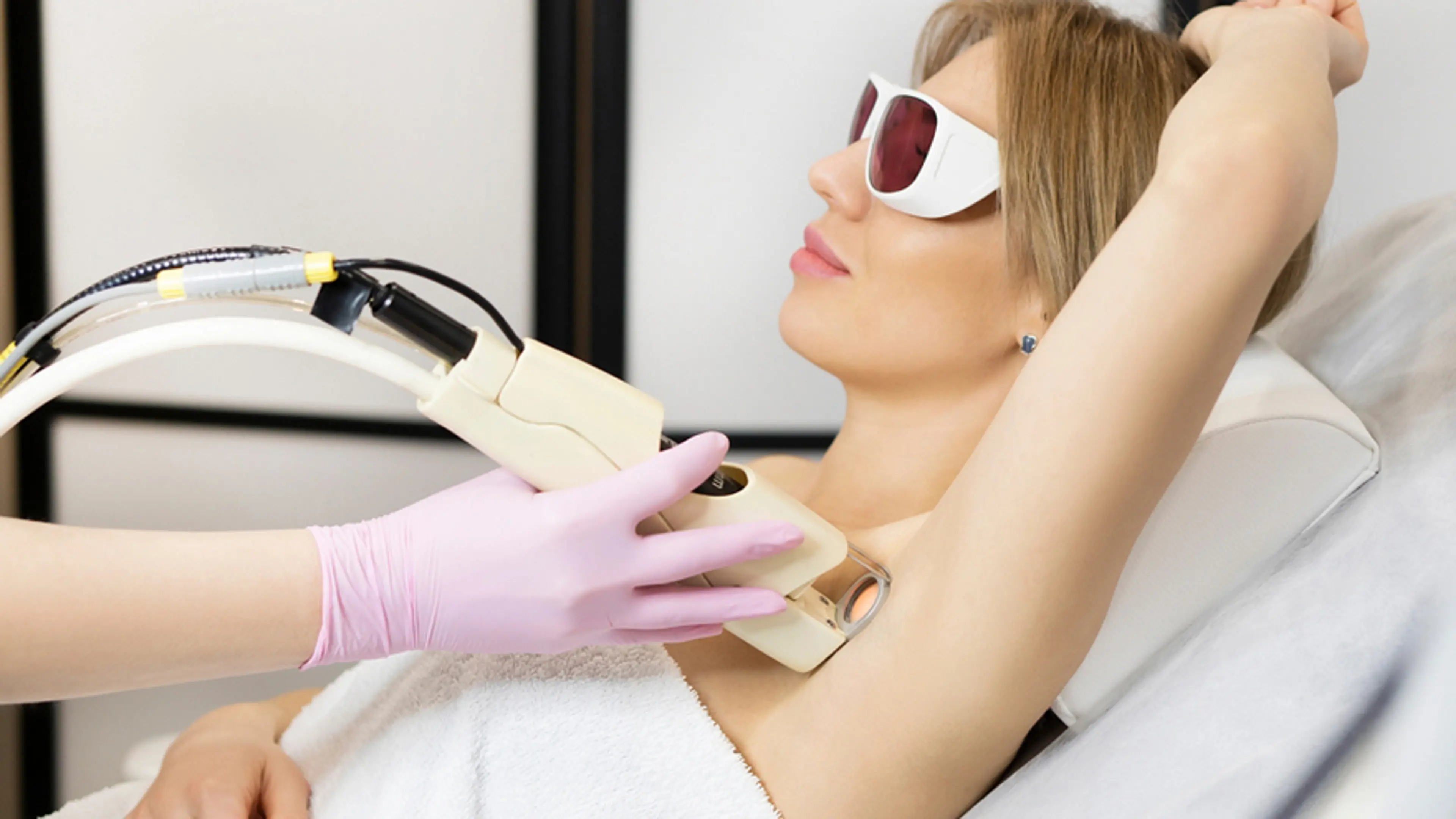
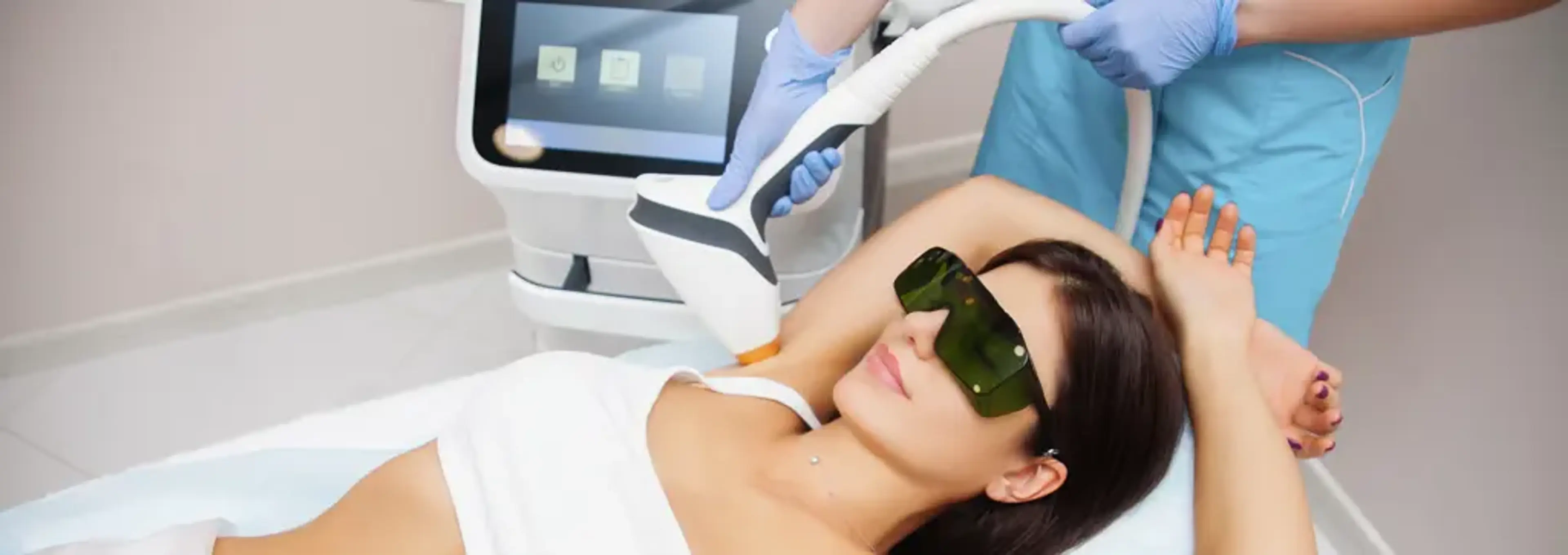
At Gumdan Ewha Hospital, we only use FDA- and KFDA-approved medical-grade lasers. These devices are equipped with advanced cooling systems and allow precise adjustment of wavelength, pulse duration, and energy settings. Every patient’s skin and hair type is evaluated before treatment, so the laser is calibrated to target hair — not irritate skin.
One of the biggest frustrations our patients share is that hair removal itself causes skin flare-ups. After a course of laser treatments, the need for shaving or waxing decreases dramatically, which means fewer triggers for irritation.
Unlike waxing, which physically rips hair (and sometimes skin), the laser penetrates directly to the follicle. There’s no pulling, scraping, or tearing of the skin surface.
Modern devices include sapphire contact cooling or cryogen sprays that cool the skin in real time. For sensitive skin, this makes the procedure far more tolerable.
The difference between a rushed salon session and a medical consultation is huge. Sensitive skin requires adjustments in energy settings, pulse intervals, and sometimes combination treatments to protect the barrier.
Older-generation lasers or poorly trained operators could cause burns. But in skilled medical hands, the risk is minimal. Sensitive patients at our hospital often leave with only mild redness that fades within hours.
Hyperpigmentation (dark marks) or hypopigmentation (light spots) can happen if the wrong wavelength is used. That’s why skin tone and history of pigmentation must be carefully assessed. At Gumdan Ewha, our doctors tailor wavelength choices to Korean and Asian skin tones, which are more prone to pigmentation shifts.
The sensation is usually described as a quick snap, like a rubber band. Some patients with sensitive skin do feel it more acutely, but with numbing cream and cooling technology, it’s manageable. Many say it’s less painful than waxing.
To maximize results and minimize risks, preparation and recovery are key. Here’s what we emphasize at Gumdan Ewha:
Many patients are pleasantly surprised by how mild the downtime feels compared to the raw irritation of waxing.
At Gumdan Ewha Hospital, sensitive skin isn’t seen as a problem — it’s a starting point for personalization. Our philosophy is that no two patients should receive the exact same settings or plan.
Here’s how we care for sensitive skin patients:
This integrated approach is what makes our outcomes safer and longer-lasting.
While most sensitive skin patients can safely undergo laser hair removal, there are scenarios where caution is necessary:
In these cases, we may recommend delaying treatment or modifying the plan.
One of our recent patients, a 29-year-old office worker in Incheon, came to us after giving up on waxing. She described her skin as “constantly angry” — every session left her with itchy welts. She worried that a laser would be even harsher.
After a detailed consultation, we started with lower energy settings and intensive cooling. Post-treatment, she was surprised to see that her skin calmed down faster than it ever did with waxing. Over several sessions, not only did hair growth reduce significantly, but her overall skin comfort improved because she no longer had to shave daily.
Stories like hers remind us that sensitive skin patients don’t have to live in fear of aesthetic treatments — they just need the right care.
For people with sensitive skin, hair removal often feels like choosing the “least bad” option. Shaving stings, waxing burns, creams irritate. But with medical-grade laser hair removal, the equation changes.
When performed under expert guidance, laser hair removal can be one of the gentlest and most effective solutions for sensitive skin. The key is personalization: selecting the right device, settings, and aftercare based on your unique skin profile.
At Gumdan Ewha Hospital in Seo-gu, Incheon, we don’t just perform procedures — we build trust. Every treatment is guided by compassion, precision, and a long-term view of your skin health.
If you’ve been holding back because you’re worried about sensitivity, we invite you to explore your options with us. You deserve smooth, comfortable skin without the cycle of irritation.